
Betaine hydrochloride shows up in a lot of gut health conversations, and most of them leave you more confused.
Maybe you keep seeing “Betaine HCl” on supplement shelves and don’t know what it does.
Maybe you’ve read that it’s the same as TMG.
Or you just want to know which one to buy and where to get it.
I dug into how it works, how it compares to similar products, and what to look for on the label.
Here’s the plain version.
Quick note: some links in this article are affiliate links. If you buy through them, I may earn a commission at no extra cost to you. It doesn’t change what I write.
What Is Betaine Hydrochloride?
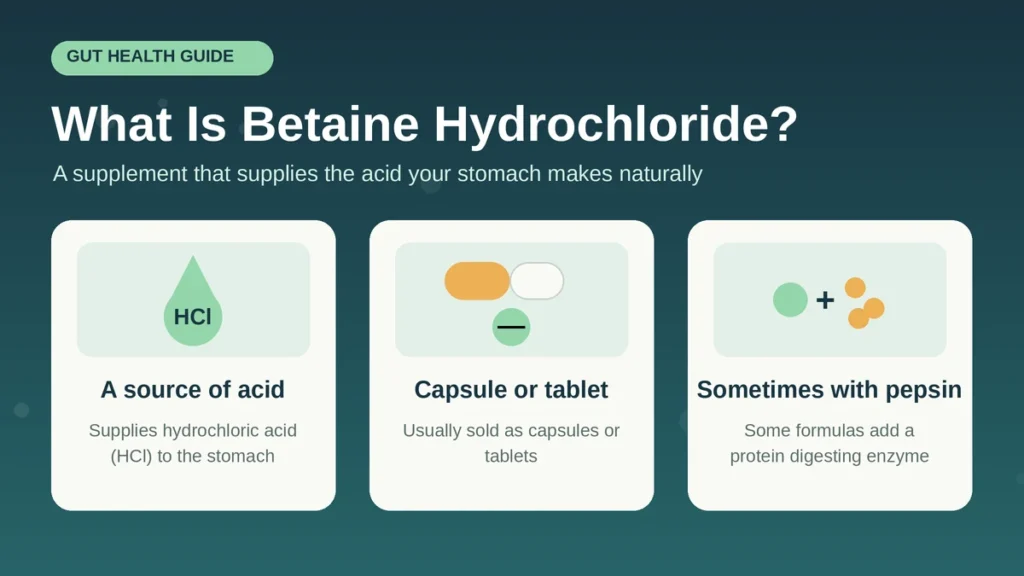
Betaine hydrochloride is a supplement ingredient.
It’s a source of hydrochloric acid, the same acid your stomach makes naturally.
You’ll see it called:
- Betaine HCl
- Betaine hydrochloride
- Betaine HCl capsules or tablets
It’s usually sold as a capsule or tablet.
Some products add pepsin, which is a protein digesting enzyme.
Here’s the key point.
The supplement is meant to add acid to the stomach.
That’s a very different job from most other digestion products.
What Is Betaine HCl Used For?
People mostly buy betaine HCl for digestive support.
Product labels usually talk about:
- Supporting stomach acidity
- Supporting protein digestion
- Helping with occasional bloating, gas, or indigestion
Notice the wording.
Labels say “supports.”
They don’t say “treats” or “cures.”
I’m not a doctor, and this supplement isn’t a fix for every stomach problem.
Heartburn, bloating, and indigestion can have many causes.
Some of those causes get worse with extra acid.
So the real answer to “what is it used for” is simple.
It’s used by people who think they may have low stomach acid and want to support digestion.
And a doctor should help you figure out whether that’s you.
How Betaine Hydrochloride Relates to Digestion
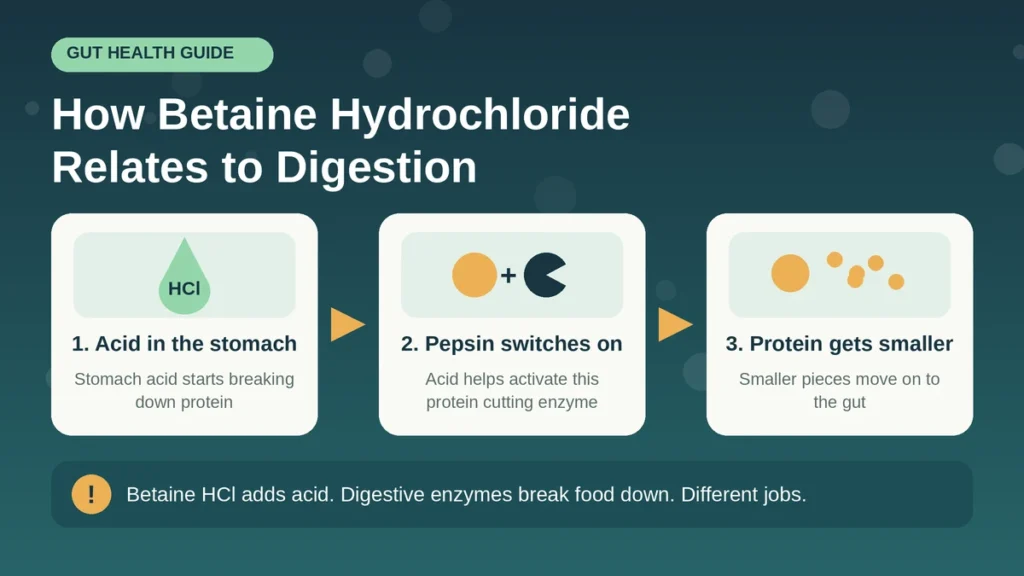
Digestion starts in your stomach.
Stomach acid helps break down protein.
It also helps activate pepsin, an enzyme that cuts protein into smaller pieces.
If acid is low, some people feel:
- Full for a long time after meals
- Bloated after protein heavy foods
- Gassy or uncomfortable
Those symptoms are common, and they overlap with lots of other issues.
Low acid is only one possible reason.
That’s where betaine HCl comes in.
The idea is to add a bit of acid with a meal.
It also helps to know how it fits with other digestion products.
Digestive enzymes help break food down.
Betaine HCl adds acid.
They’re different tools, and I explain the enzyme side in my guide to the best digestive enzymes.
Betaine HCl With Pepsin
You’ll see a lot of formulas listed as betaine HCl with pepsin.
It’s one of the most common combos on the shelf.
Here’s why.
Pepsin works best in an acidic stomach.
So pairing pepsin and betaine makes sense on paper.
What to check:
- Is pepsin on the label? Not every betaine product has it
- What’s the strength? Look at the milligrams of each ingredient
- Any extras? Some formulas add other digestive ingredients
- Is it a “proprietary blend”? If so, you can’t see the exact amounts
If you just want plain betaine HCl, there are single ingredient options.
If you want the combo, make sure the label shows what’s inside.
Betaine HCl vs Trimethylglycine
This one trips up a lot of people.
Betaine HCl and trimethylglycine (TMG) sound alike.
They are not the same supplement.
- Betaine HCl: a source of stomach acid, used for digestive support
- TMG (trimethylglycine): a different form of betaine, used for things like methylation and exercise support
Search results mix them together all the time.
If you search betaine TMG vs betaine HCl, you’ll see both side by side.
Here’s what I’d tell a friend.
If you want stomach acid support, look for betaine HCl.
If you want TMG, that’s a separate product with a different purpose.
Don’t swap one for the other.
Betaine Anhydrous vs Betaine HCl
Betaine anhydrous is the same thing as TMG.
It’s the plain form of betaine with no acid attached.
Here’s the quick breakdown:
- Betaine anhydrous (TMG): no acid. Often sold as a powder or in pre workout products
- Betaine HCl: has hydrochloric acid. Sold for stomach acid support
So when you compare betaine anhydrous vs betaine HCl, the big difference is the acid.
That’s also why the safety notes are different.
Read the label and make sure the name says “hydrochloride” if digestion is your goal.
How to Choose the Best Betaine Hydrochloride Supplement
People ask me about the best betaine hydrochloride supplement all the time.
I don’t think one product wins for everyone.
But here’s how I’d shop.
- Check the name. It should say betaine hydrochloride or betaine HCl
- Look at the amount per serving. Labels range a lot, so compare milligrams
- Decide on pepsin. Some people want it, some want plain betaine HCl
- Read “other ingredients.” Watch for fillers and allergens
- Check the format. Capsules and tablets are common
- Look at the price per serving. Not just the bottle price
- Read recent reviews. Look for patterns, not one off comments
That checklist also works if you’re hunting for the best betaine HCl supplement or the best betaine supplement in general.
Match the product to your goal first.
Then compare price.
Wonder Laboratories Betaine Hydrochloride
Wonder Laboratories sells a betaine hydrochloride supplement.
The price I found was $11.98.
That’s a low entry price for this type of product.
Here’s what I’d tell you about it:
- It’s a straightforward digestive support product. That’s the main appeal
- The price is budget friendly. Good if you want to try it without a big spend
- Check the label before you buy. Look at the strength per serving and the other ingredients
- I couldn’t confirm every detail. Exact strength and whether it includes pepsin should be checked on the product page
If you want to know more about the company behind it, read my Wonder Laboratories review.
Who it may suit: people who want a simple, low cost betaine HCl supplement and are comfortable reading labels.
Who may want to skip it: anyone with a stomach condition, ulcer history, or who takes certain medications, unless a doctor says it’s fine.
If that sounds like you, you can check the current Wonder Laboratories Betaine Hydrochloride price here.
Where to Buy Betaine Hydrochloride
If you’re asking where to buy betaine HCl or where can I buy betaine HCl, you have a few options.
- Online supplement stores: easy to compare labels and prices
- Health food stores: you can read the bottle in person
- Pharmacies and big retailers: some stock it, but selection is smaller
- Practitioner channels: some brands sell through doctors and dietitians
The same goes for where to buy betaine hydrochloride and where can I buy betaine hydrochloride.
Online stores are usually the easiest place to compare ingredients, strengths, and prices side by side.
A quick buying checklist:
- Check the seller
- Check the expiration date
- Look at the return policy
- Make sure the label matches the product page
Betaine HCl also fits into a bigger picture.
For more on that, see my guide to the best natural supplements for gut health.
Potential Benefits, Limitations and Considerations
What it may help with:
- Supporting stomach acidity
- Supporting protein digestion
- Fitting into a wider digestive support routine
The limits:
- Low stomach acid is hard to confirm at home
- Many symptoms have other causes
- Results vary a lot from person to person
- It isn’t a substitute for medical care
Important safety notes:
- It adds acid, so it may irritate some people
- It isn’t a good fit for people with ulcers, gastritis, or active stomach pain
- Some medications can interact, including anti inflammatory drugs and acid reducing medicines
- Pregnant or nursing women should check with a doctor first
I’m not going to give you a dose plan.
Dosing depends on the product, and it should come from the label or your doctor.
If you get burning, pain, or any new symptoms, stop and call a doctor.
Final Verdict
Betaine hydrochloride is a real option for people who want to support stomach acid and protein digestion.
It’s also easy to misuse.
Here’s my take:
- Know what you’re buying. Betaine HCl is not TMG
- Read the label. Strength and ingredients matter
- Talk to a doctor first. Especially if you have stomach issues or take medication
- Start small. Don’t stack it with five other new supplements
If you want a budget friendly option, Wonder Laboratories Betaine Hydrochloride at $11.98 is worth a look.
Just check the label first and get a doctor’s okay if you have any stomach history.
Ready to take a closer look?
See Wonder Laboratories Betaine Hydrochloride and the current price here.
FAQs
What is betaine hydrochloride?
It’s a supplement that supplies hydrochloric acid, the acid your stomach makes naturally.
People use it for digestive support.
What is the best betaine hydrochloride supplement?
It depends on your goal and your label preferences.
Compare strength, pepsin, other ingredients, and price per serving.
What’s the difference between betaine HCl vs trimethylglycine?
Betaine HCl adds stomach acid.
Trimethylglycine (TMG) is a different form of betaine used for other purposes.
Is betaine anhydrous the same as betaine HCl?
No.
Betaine anhydrous is TMG and has no acid, while betaine HCl does.
What is betaine HCl with pepsin?
It’s a formula that pairs betaine HCl with pepsin, a protein digesting enzyme.
Pepsin and betaine are often sold together for protein digestion support.
Where can I buy betaine hydrochloride?
You can find it online, in health food stores, and at some pharmacies.
Online stores make it easy to compare labels and prices.
Where to buy betaine HCl at a good price?
Compare the price per serving, not just the bottle price.
Budget friendly options like Wonder Laboratories are worth checking.
Is betaine HCl safe for everyone?
No.
It may not suit people with ulcers, gastritis, or certain medications, so talk to a doctor first.
Is betaine HCl the same as digestive enzymes?
No.
Betaine HCl adds acid, while enzymes help break food down.
Should I talk to a doctor first?
Yes, especially if you have a stomach condition, take medication, or are pregnant or nursing.
That’s my take on betaine hydrochloride.
Read the label, check with your doctor, and choose what fits your gut.